A practical guide to Meghalaya for first-timers: how to split your days between Shillong, Sohra, Nongriat, Mawlynnong and Dawki, and when to go.
Quick facts
- Best time
- October to April
- Ideal stay
- 5 to 7 nights
- Getting there
- Fly to Guwahati or Shillong
- Good for
- Nature, trekking, villages
- Budget style
- Mid-range, driver costs add up
Meghalaya works best as a trip of five to seven nights, based in two or three places rather than one. Most travellers fly into Guwahati, spend a night or two in Shillong, then head into the Khasi Hills for the waterfalls, caves and living root bridges, and finish at the clear river near Dawki.
The state is small, but roads are slow and winding, so a day of driving rarely covers more than one or two major sights. Plan fewer stops and enjoy them.
Getting there and moving around
The usual route is a flight to Guwahati in Assam, followed by a drive of roughly three to four hours to Shillong. Guwahati has direct flights from several big cities, including Delhi, Mumbai and Bengaluru, while from Chennai you may need a connection. Shillong also has its own small airport, but flight options change, so check what is operating when you book.
Public transport between sights is limited. Most visitors hire a car with a driver for the whole trip, and that is usually the simplest choice. Shared sumos run between towns, but they do not reach most viewpoints and trailheads.
Rules for visitors to Meghalaya, including any permit or registration for outside travellers, have been updated from time to time. Check the current requirement before you book, or ask us.
Shillong: a gentle start
Shillong sits at a cool height and has a relaxed, café-and-music feel. Spend an evening at Police Bazaar and Laitumkhrah, where you will find bakeries, bookshops and small restaurants.
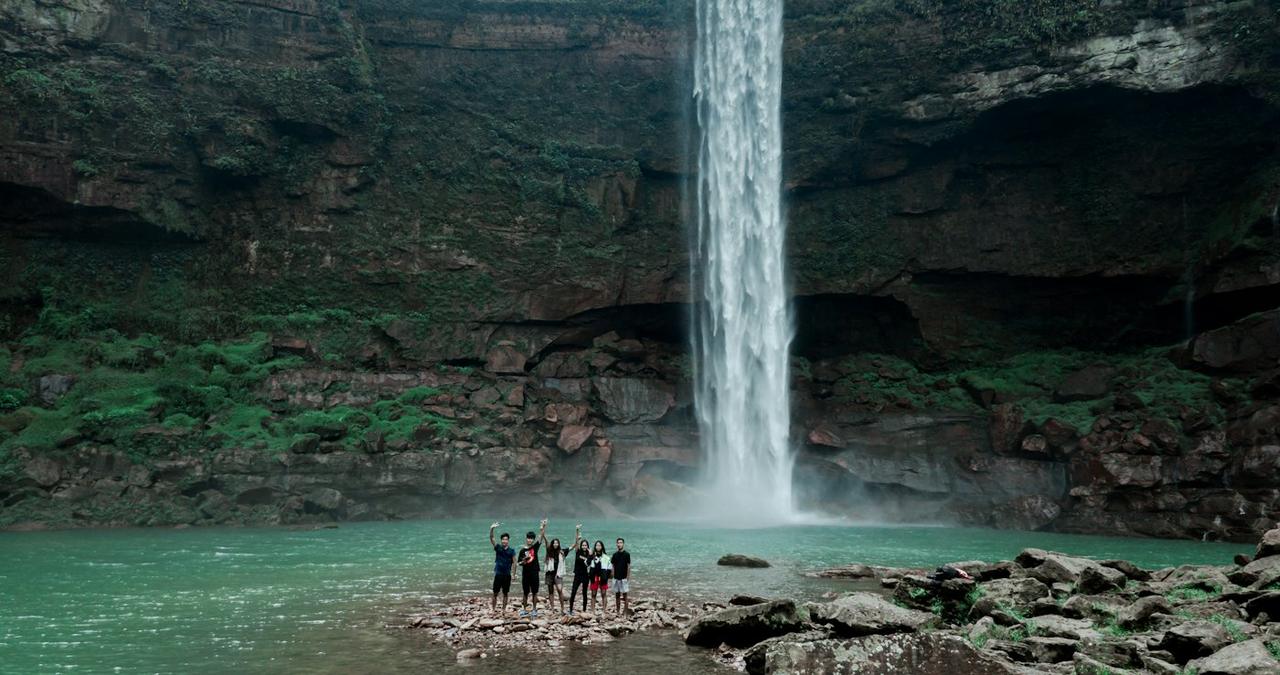
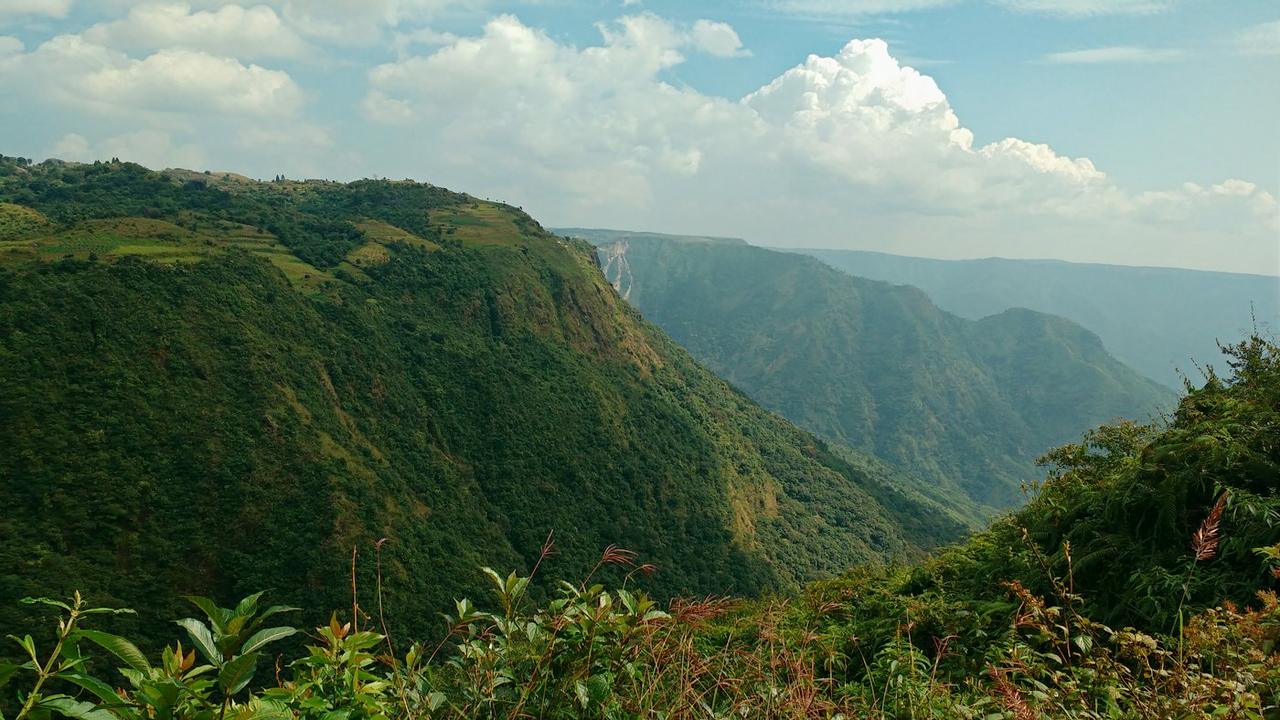
Nearby sights include Umiam Lake for boating and views, Elephant Falls, and Ward's Lake in town. For a viewpoint with a wilder feel, ask your driver about Laitlum Canyons, a short drive out, best seen in clear morning light.
Try Khasi dishes such as jadoh (rice cooked with meat) and dohneiiong (a pork dish with black sesame). Vegetarians can ask for local vegetable preparations.
Sohra (Cherrapunji): waterfalls and caves
Sohra is about two to three hours from Shillong by road. The area is famous for rain, and in and after the monsoon its waterfalls are at their fullest. Highlights:
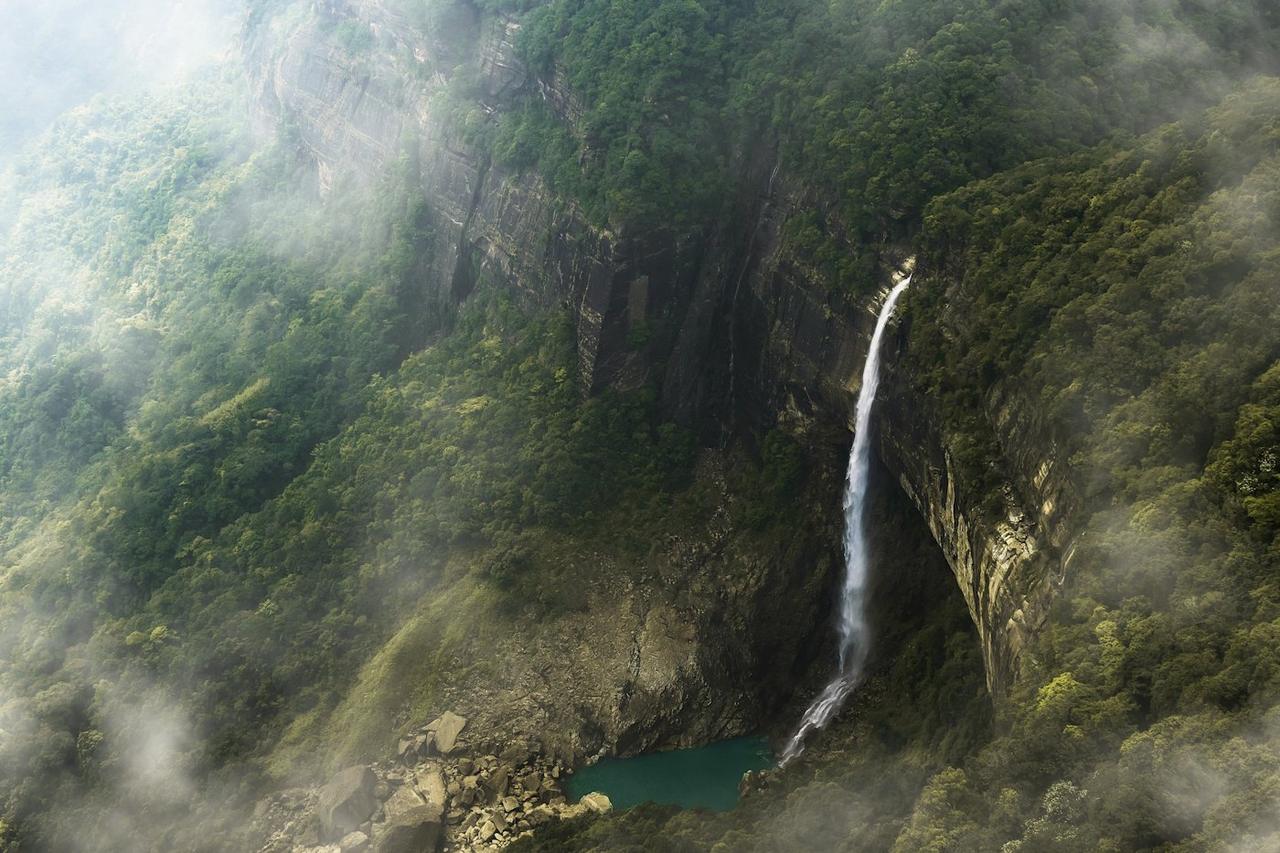
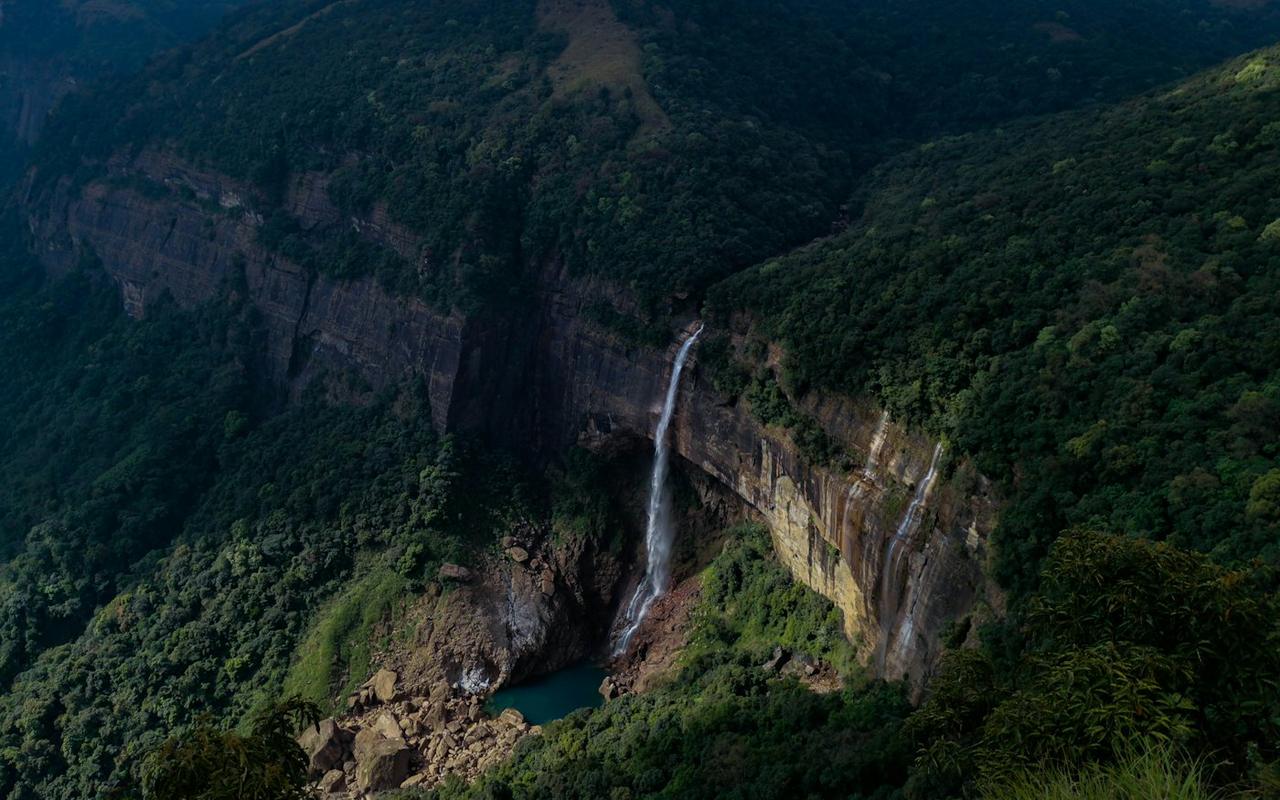
- Nohkalikai Falls, a tall plunge best seen from the viewpoint when the clouds clear.
- Seven Sisters Falls, which spreads across a cliff face in several streams.
- Mawsmai Cave, a lit limestone cave you can walk through in about half an hour, with some narrow, damp stretches.
Mist can hide the views completely, so keep a flexible plan and visit viewpoints earlier in the day.
Nongriat: the double-decker root bridge
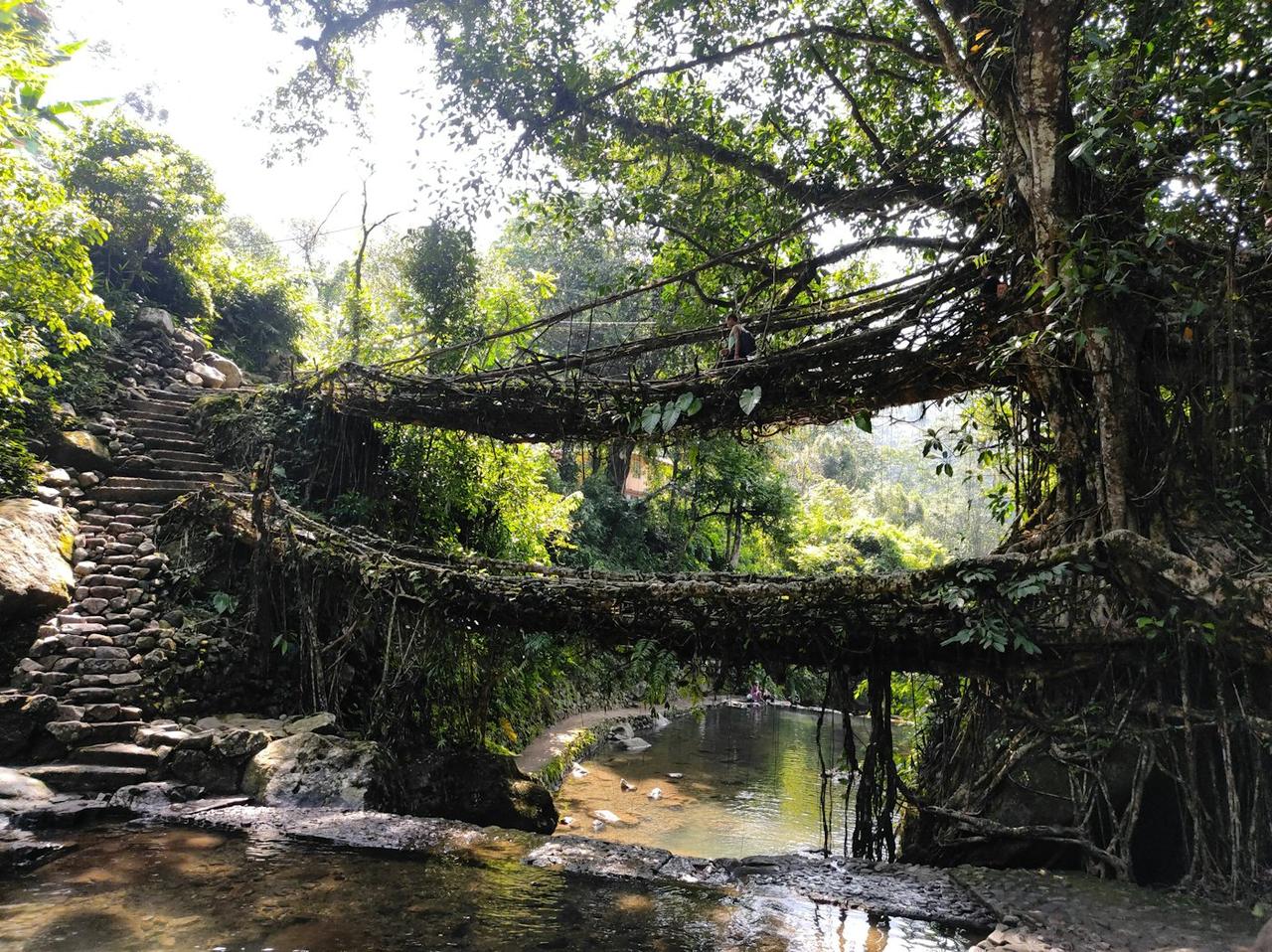
This is the part many people travel for. In the Khasi Hills, villagers have trained the roots of rubber fig trees across streams over many years to form living bridges. The best known is the double-decker root bridge near Nongriat, reached from the village of Tyrna.
The trek is a descent down thousands of stone steps into a forested gorge, then back up. Allow around half a day for a round trip, more if you stop to swim at the blue pools nearby. You need decent knees, grippy shoes and water.
Some travellers stay overnight in Nongriat in a simple homestay, which makes the hike less rushed. Facilities are basic, so carry cash and keep expectations modest.
Mawlynnong, Dawki and the Umngot River
From Sohra, you can continue toward the Indo-Bangladesh border area. Mawlynnong is a tidy Khasi village known for its cleanliness, bamboo structures and a small root bridge of its own. It makes a pleasant stop rather than a full day.
Dawki sits on the Umngot River, famous for water so clear that boats look as if they float on air, especially in the dry months. Nearby, Shnongpdeng offers riverside stays and simple water activities. Boating is calm, but conditions depend on the season and river levels.
When to go
October to April is the most comfortable window, with clearer skies and easier trails. March and April bring warmer days and sometimes sudden showers. From June to September the monsoon is heavy. Waterfalls look dramatic, but landslides and closed trails are possible, and views can disappear.
A simple 6-day plan
- Day 1: Arrive in Guwahati, drive to Shillong.
- Day 2: Shillong sights, Umiam Lake, Laitlum Canyons.
- Day 3: Drive to Sohra; waterfalls and Mawsmai Cave.
- Day 4: Nongriat trek, with a night in the village or back in Sohra.
- Day 5: Mawlynnong and Dawki, stay by the river.
- Day 6: Return to Guwahati for onward flights.
Add a night if you want to rest after the Nongriat trek or visit Kaziranga in Assam on the way.
If this sounds like your kind of trip, see what we offer on our Meghalaya page or build your own route through custom trips. You might also like our guide to Sikkim for another hill-and-village trip in the north-east.
Written by the Indian Rounds Team. Travel rules, prices and conditions change, so please check current details with the official source or ask us before you book.
Plan Meghalaya with us
Tell us your dates and budget and we will suggest the right trip.